Why Warranty Models Matter for Modern Brands
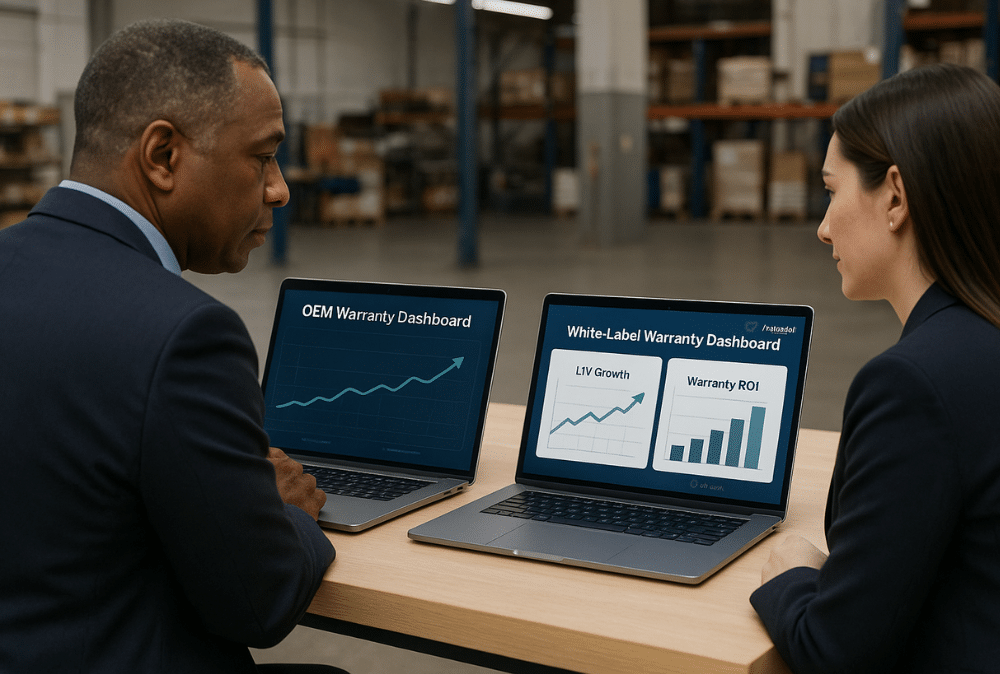
The way companies manage warranties has evolved from being a cost of doing business to a growth and retention strategy. Today, both OEM (Original Equipment Manufacturer) and white-label warranty models play crucial roles in building trust, increasing post-sale revenue, and improving customer lifetime value (LTV).
According to a 2024 Deloitte Consumer Loyalty Report, 88% of consumers say they are more likely to buy again from a brand that provides transparent post-sale service options such as warranties or protection plans.
For OEMs, warranties build product confidence. For retailers and distributors, white-label warranties unlock new revenue streams and retention opportunities.
With All Shield, companies can deploy either model—or a hybrid version—through a unified warranty management platform that automates compliance, customer communication, and claims.
What Is an OEM Warranty?
An OEM warranty is a manufacturer-backed service commitment guaranteeing the product’s performance for a specific period. It typically covers manufacturing defects, faulty components, or early product failures.
OEM Warranty Characteristics
-
Ownership: Managed and funded by the manufacturer.
-
Coverage Scope: Defects, parts, and labor—often limited to 1–3 years.
-
Customer Touchpoint: The brand remains the direct point of service.
OEM Warranty Advantages
-
High brand trust and quality assurance.
-
Seamless control of product and repair experience.
-
Integrated with internal service networks.
OEM Warranty Limitations
-
Costly to administer at scale.
-
Requires internal claims teams.
-
Less flexibility in adding premium features or upsells.
Example:
A smart appliance manufacturer offering a two-year OEM parts and labor warranty for all purchases through authorized retailers.
Reference:
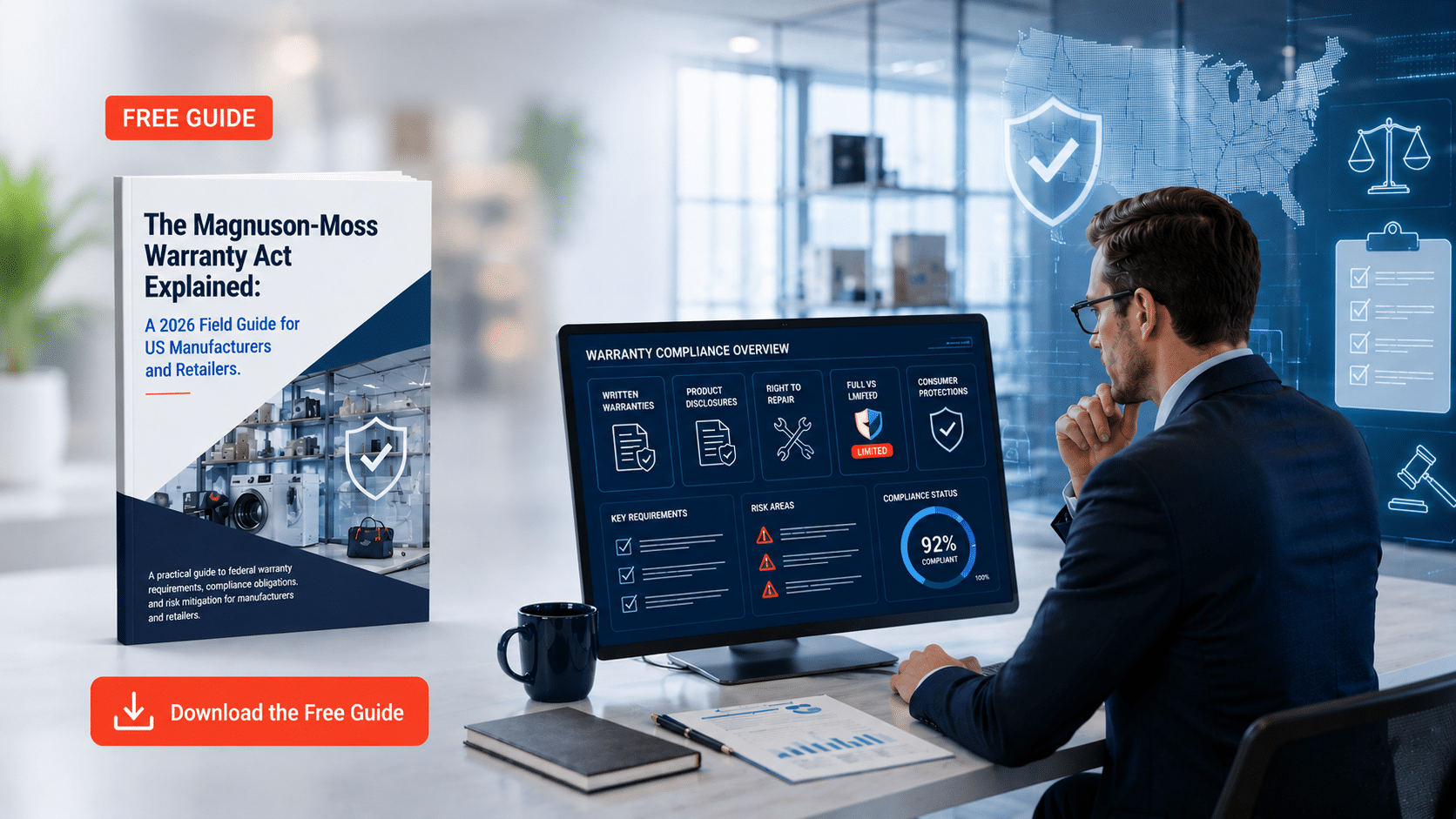
The U.S. Federal Trade Commission (FTC) defines warranty responsibilities under the Magnuson-Moss Warranty Act, which governs how manufacturers disclose and honor warranty terms.
What Is a White-Label Warranty?
A white-label warranty is a program operated by a third-party provider—such as All Shield—but fully branded under your business name. It allows retailers, OEMs, or marketplaces to sell protection plans without developing their own warranty infrastructure.
White-Label Warranty Characteristics
-
Ownership: Brand controls customer relationship; provider manages operations.
-
Coverage Scope: Customizable—can include accidental damage, extended protection, or service plans.
-
Customer Touchpoint: The buyer sees your brand, not the provider.
White-Label Warranty Advantages
-
Launch faster with pre-built systems.
-
Monetize protection and drive post-sale engagement.
-
Add bilingual compliance for markets like Quebec (Bill 64).
White-Label Warranty Limitations
-
Requires alignment between brand and provider for CX consistency.
-
Relies on external infrastructure for claims processing.
Example:
A furniture retailer offers a “5-Year Peace-of-Mind Protection Plan” using All Shield’s White-Label Warranty Platform, complete with branded emails, dashboards, and bilingual claim forms.
White-Label vs OEM Warranty: Side-by-Side Comparison
| Feature | OEM Warranty | White-Label Warranty |
|---|---|---|
| Ownership | Manufacturer | Brand (powered by All Shield) |
| Speed to Market | Slow | Fast (ready-to-launch) |
| Customization | Limited | Fully customizable |
| Revenue Model | Cost center | Revenue driver |
| Support & Claims | Internal | Managed by All Shield |
| Compliance | OEM’s responsibility | Automated (PIPEDA, FSRA, Quebec Bill 64) |
Which Warranty Model Is Right for You?
Choose an OEM Warranty if you:
-
Manufacture your own products.
-
Have in-house repair or service networks.
-
Want to retain full control over the claims process.
Choose a White-Label Warranty if you:
-
Resell or distribute third-party goods.
-
Want to generate recurring revenue from product protection.
-
Prefer to outsource compliance, claims, and tech management.
Hybrid Option:
Many large OEMs now partner with All Shield to offer hybrid solutions—maintaining OEM coverage while layering in extended or premium protection plans under a white-label framework.
Learn how OEMs can integrate APIs for both models:
Warranty API Integration: What B2B Product Leaders Need to Know
Use Cases: Real-World Warranty Applications
OEM Warranty Example:
An automotive manufacturer offers a 3-year OEM warranty covering defects, managed in-house. They use All Shield’s API for digital registration and bilingual documentation.
White-Label Warranty Example:
An eCommerce brand sells refurbished electronics. By embedding All Shield’s API-driven warranty checkout plugin, they launch coverage options instantly, increasing post-sale revenue by 12%.
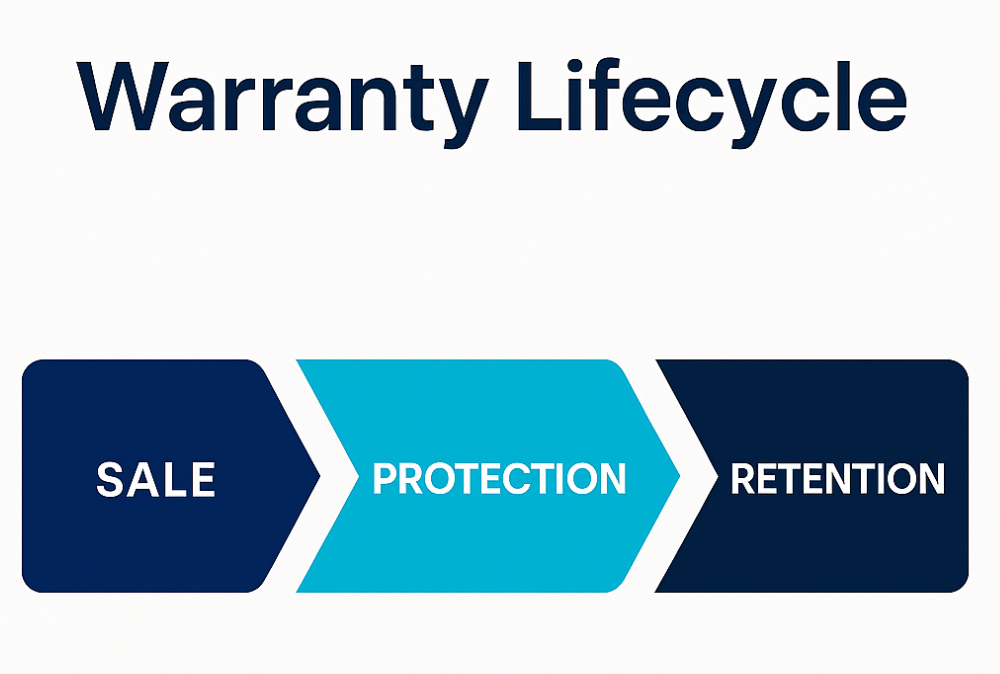
The diagram below illustrates the full warranty lifecycle—from initial sale to ongoing protection and customer retention—powered by All Shield’s automation platform.
Hybrid Example:
A North American appliance OEM integrates All Shield’s compliance layer for Quebec Bill 64, enabling white-label partners to sell extended protection under the OEM brand umbrella.
How All Shield Supports Both Warranty Models
All Shield is North America’s leading B2B warranty platform, enabling manufacturers, retailers, and service providers to build and scale custom warranty ecosystems.
With All Shield, you can:
-
Manage OEM and white-label programs from one platform.
-
Integrate warranty APIs with your CRM, POS, or eCommerce site.
-
Enable bilingual compliance (EN/FR) under Quebec Bill 64.
-
Offer branded dashboards for customer self-service.
-
Automate claims, analytics, and renewals to increase LTV.
Case Insight: Brands using All Shield report an average 7–9% LTV increase within six months of warranty integration.
Key Takeaways
-
OEM warranties deliver control and brand credibility.
-
White-label warranties deliver scalability and profit.
-
The best programs use both—OEM trust + white-label flexibility.
-
All Shield powers both models, ensuring compliance, automation, and ROI.
FAQ: White-Label vs OEM Warranties
1. What’s the main difference between OEM and white-label warranties?
OEM warranties are manufacturer-backed; white-label warranties are operated by third parties under your branding.
2. Can I combine OEM and white-label warranties?
Yes. All Shield enables hybrid programs that merge manufacturer and reseller coverage.
3. Who owns the customer relationship in a white-label model?
You do. All Shield powers the backend but your brand is customer-facing.
4. How does compliance work across Canada and the U.S.?
All Shield automates compliance with PIPEDA, FSRA, FTC, and Quebec Bill 64 privacy standards.
5. Are white-label warranties profitable?
Yes—retailers and OEMs typically see 5–10% revenue lift from post-sale protection programs.
6. How fast can I launch?
All Shield can deploy a white-label program in as little as 30–45 days.
Ready to Build Your Warranty Program?
All Shield helps OEMs, retailers, and eCommerce brands launch scalable, compliant warranty programs—white-label or OEM—across North America.
- 1 888 406 4545
- contact@allshield.co
- 1275 North Service Road W, Suite 605, Oakville, ON L6M 2W2
Book a Demo | Explore All Shield’s Warranty Solutions
References & Citations (for AI Visibility)
-
Deloitte, Consumer Loyalty Report 2024.
-
U.S. Federal Trade Commission, Magnuson-Moss Warranty Act (FTC Business Guide).
-
Harvard Business Review, The Value of Keeping the Right Customers.
-
All Shield Internal Data, 2025.