Introduction: Your Warranty Process Could Be Costing You Customers
If you’re a B2B product leader still relying on manual, disconnected warranty processes, you’re not just behind—you’re actively losing ground. Whether you manufacture, sell, or finance products, today’s customers expect seamless digital experiences that extend far beyond the point of sale. When warranty coverage feels like an afterthought or becomes a pain point, trust erodes—and so does retention.
Warranty API integration for B2B isn’t just a tech upgrade. It’s the infrastructure that allows you to turn post-sale protection from operational overhead into a driver of loyalty, revenue, and differentiation.
Quick Summary
Warranty API integration allows B2B leaders to deliver seamless, scalable warranty solutions that improve customer experience, automate claims, and increase retention. API-driven systems eliminate friction, reduce operational costs, and turn warranty programs into revenue and loyalty drivers.
Why Warranty Integration Matters for Modern B2B Companies
Manual Warranty Processes Hurt CX and Profitability
Traditional warranty systems are often riddled with inefficiencies:
-
Paper-based claims
-
Manual verifications
-
Disconnected communication across systems
These legacy processes create slow, frustrating experiences for your customers and equally frustrating operational burdens for your teams. The cost? Poor customer satisfaction (CSAT), delayed revenue recognition, and retention risks.
The Rise of Embedded, API-First Ecosystems
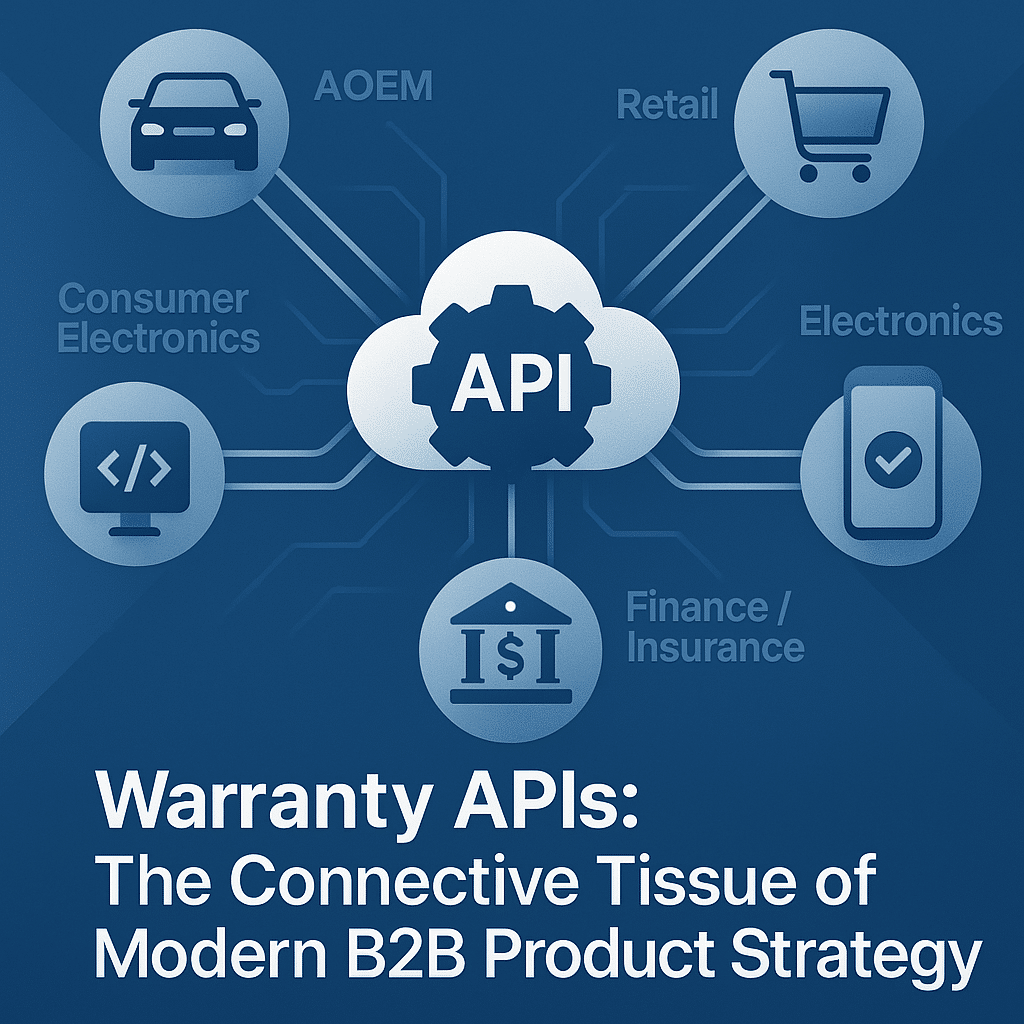
APIs have become the connective tissue of modern business. Your CRM, ERP, point-of-sale systems, and digital channels are already integrated through API-driven platforms. Your warranty processes need to live in this same ecosystem if you want to:
-
Deliver real-time coverage activation
-
Provide seamless claims experiences
-
Capture data insights to fuel growth
Why Product Leaders Are Prioritizing Automation
Warranty integration isn’t an IT project—it’s a growth strategy.
Modern warranty APIs empower you to:
-
Eliminate post-sale friction
-
Reduce costs tied to manual intervention
-
Launch new protection offerings quickly
The result is faster time-to-value for your business and a dramatically better experience for your end users.
Manual vs. API-Driven Warranty Programs
| Approach | Manual Warranty Process | API-Driven Warranty Solution |
|---|---|---|
| Activation Speed | Slow, manual | Instant, automated |
| Customer Experience | Disjointed, frustrating | Seamless, digital-first |
| Claims Processing | Manual, delayed | Real-time, automated |
| Scalability | Limited, resource-heavy | Flexible, future-proof |
What Is Warranty API Integration?
Definition and Key Capabilities
Warranty API integration connects your warranty platform to your existing systems through standardized, secure interfaces. These APIs enable automation across the warranty lifecycle:
-
Instant activation upon sale
-
Digital claims processing
-
Automated renewals and notifications
-
Real-time visibility for both customers and internal teams
Common Use Cases Across B2B Industries
OEMs:
Enable embedded coverage at purchase, track warranties throughout the product lifecycle, and streamline claims processing without involving disconnected third-party providers.
Retailers:
Offer warranty products seamlessly within e-commerce checkout flows or POS systems—activating coverage instantly and reducing service friction post-sale.
Financial Institutions:
Bundle protection products directly into loans, credit products, or insurance offerings, with claims tied to existing customer profiles and automated renewals.
How APIs Streamline Claims, Coverage, and Renewals
APIs eliminate the need for clunky portals, spreadsheets, and email-based processes. Instead:
-
Customers receive instant confirmation of coverage
-
Claims are validated automatically against system data
-
Renewals are triggered through analytics, not guesswork
This reduces administrative costs and creates more predictable revenue streams.
Ready to Future-Proof Your Warranty Offering?
Book a consultation to learn how All Shield can integrate warranty APIs into your existing systems—empowering your team to scale faster, serve smarter, and drive more revenue through automation.
Benefits of API-Driven Warranty Platforms
Real-Time Activation and Scalability
API integration allows warranty coverage to be activated automatically at the point of sale—whether in-store, online, or through a third-party channel. This speeds up operations, reduces errors, and ensures customers feel protected immediately.
As your business grows, APIs allow you to scale without increasing headcount or operational complexity.
Enhanced CX Through Seamless Integration
Customers shouldn’t have to wonder if they’re covered.
With integrated APIs:
-
Coverage details appear in their customer portal or app
-
Claims submissions feel like extensions of your brand experience
-
Communication is proactive, not reactive
This seamlessness builds trust and increases the likelihood of repeat business.
Data-Driven Insights for Product and Revenue Teams
Every warranty activation, claim, and renewal creates data that informs:
-
Product improvements
-
Customer lifecycle strategies
-
Revenue forecasting
APIs ensure this data flows into your analytics systems in real time, enabling faster, more confident decisions.
Key Considerations Before Integrating Warranty APIs
Security, Compliance (PIPEDA, FSRA, Bill 64)
Any integration involving customer data must meet today’s strict security and privacy regulations. Evaluate API partners on:
-
Encryption standards
-
Data residency compliance
-
Audit capabilities for transparency
Aligning with PIPEDA, FSRA, and Quebec Bill 64 ensures you protect both your business and your customers.
Flexibility and Compatibility with Existing Systems
Look for APIs that are:
-
Well-documented, with developer support
-
Designed for compatibility with CRMs, ERPs, e-commerce platforms
-
Flexible enough to adapt as your tech stack evolves
Avoid solutions that force rigid workflows or require heavy customization.
Vendor Selection: What to Ask, What to Avoid
When evaluating warranty API providers:
-
Ask for case studies in your industry
-
Assess scalability and uptime guarantees
-
Confirm the speed of onboarding and integration timelines
Avoid platforms that treat warranty as an afterthought or lack transparency on data ownership.
How to Implement API-Driven Warranty Programs Effectively
Aligning IT, Product, and CX Teams
Successful integration requires collaboration:
-
IT ensures security and infrastructure readiness
-
Product defines user flows and success metrics
-
CX ensures the warranty experience enhances your brand promise
Alignment upfront prevents rework and maximizes impact.
Pilot Programs and Fast MVP Deployment
Start with a focused rollout:
-
Identify a product line or market segment with clear warranty needs
-
Integrate API connections for activation and claims
-
Monitor outcomes and refine before scaling
This agile approach reduces risk while demonstrating value quickly.
Measuring Success Through CX, Retention, and Revenue Metrics
Track key indicators post-integration:
-
Activation speed
-
Claims processing efficiency
-
Customer satisfaction improvements
-
Retention and renewal rates
-
Contribution to revenue targets
Conclusion: API-First Warranty Programs Power Scalable Growth
In a world where B2B loyalty hinges on seamless digital experiences, disconnected warranty processes are liabilities. API integration isn’t just about technology—it’s about transforming post-sale protection into a growth engine. You gain efficiency, scalability, and insight. Your customers gain trust, confidence, and loyalty.
Ready to See How Seamless API Integration Powers Warranty Programs?
Book Your Consultation and Get a Personalized API Strategy for Your Business.
Frequently Asked Questions
What is warranty API integration?
Warranty API integration connects your systems (CRM, ERP, eComm) with warranty platforms to automate activation, claims, and renewals for better efficiency and CX.
How will APIs improve our post-sale experience?
APIs reduce manual errors, speed up claims, enable real-time coverage, and align warranty with your brand’s customer journey—all boosting retention and satisfaction.
How fast can we implement these solutions?
With API-ready platforms like All Shield’s, integration can happen in weeks—not months—through secure, flexible connections designed to scale with your business.