One Breach, One Lawsuit, One Lost Brand
It doesn’t take a major hack to destroy years of brand loyalty—just one exposed warranty record. One leaked VIN. One unsecured customer portal. In today’s trust-fragile world, cybersecurity in warranty programs isn’t optional—it’s existential.
As cybercrime continues to evolve, warranty programs remain a soft target. And with data privacy regulations tightening across North America, what used to be a “back-office” function is now a boardroom issue.
If your warranty process touches customer data, you’re already a target. The only question is: are you ready?
🔐 Quick Summary: What’s the Risk?
Cybersecurity in warranty programs is not optional—it’s survival. A single exposed VIN or service record can cost your business millions and destroy years of trust. Legacy systems and unsecured vendor APIs are soft targets.
- Map every data touchpoint
- Upgrade to certified platforms (SOC 2, ISO 27001)
- Train staff and monitor access
💡 Want peace of mind? Start with a security audit tailored to your warranty flow.
The Fix:
- Map every data touchpoint
- Upgrade to certified platforms (SOC 2, ISO 27001)
- Train staff and monitor access
Want peace of mind? Start with a security audit tailored to your warranty flow.
Why Cybersecurity in Warranty Services Can’t Wait
Warranty Data Is a Goldmine for Hackers
- It includes names, contact info, product IDs, and often service histories.
- Many systems were built pre-privacy era—vulnerable, outdated, unencrypted.
- Customers rarely know how their data is used or stored.
According to IBM’s 2024 Cost of a Data Breach Report, the average breach costs $4.45M USD, and consumer trust takes years to rebuild—if it ever does.
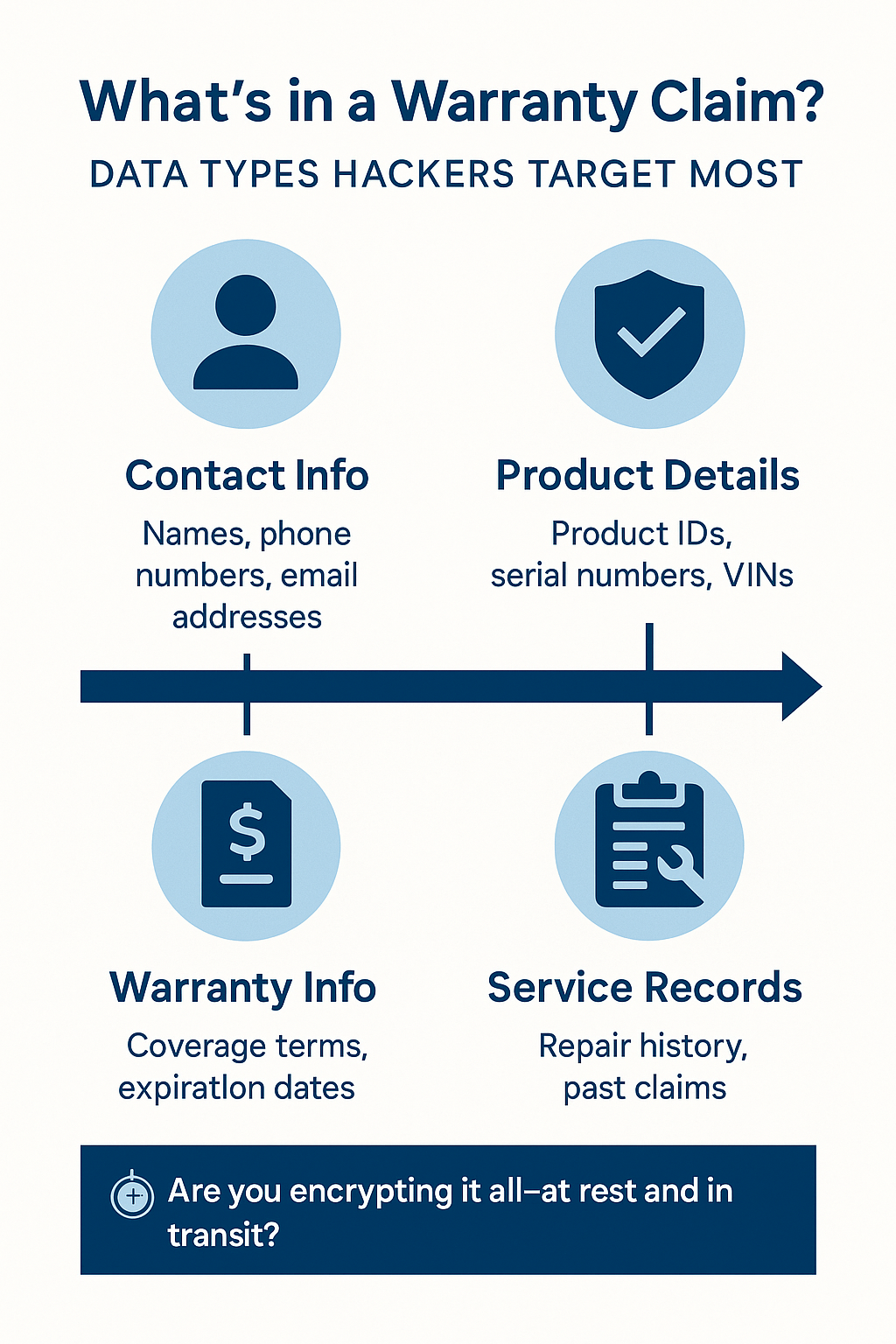
What Makes Warranty Platforms So Vulnerable?
Outdated Systems and Third-Party Sprawl
- CRMs not built with PIPEDA or GDPR in mind
- APIs connected to vendors with poor access control
- Service reps using unsecured devices or shared logins
Common Cybersecurity Gaps
- No multi-factor authentication
- Inadequate encryption for customer portals
- No logging or audit trails on data access
How to Build a Cyber-Secure Warranty Program
You don’t need a million-dollar overhaul—just the right steps in the right order.
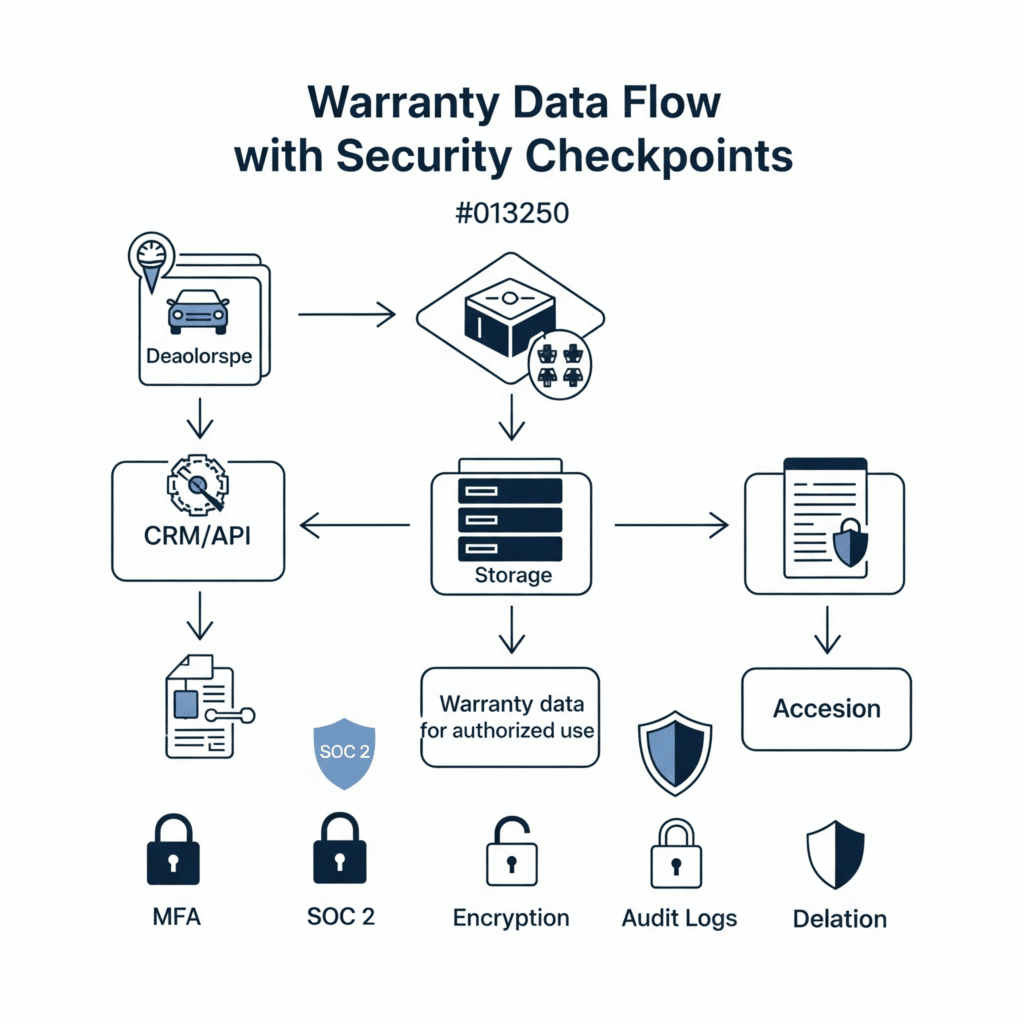
Step 1: Map the Full Data Journey
- From point of collection (web, dealership, app) to storage and deletion
- Identify every system, tool, and human that touches the data
Step 2: Upgrade Your Tools and Controls
- Choose platforms with SOC 2, ISO 27001 certifications
- Enable MFA and auto-logout protocols
- Encrypt data in transit and at rest
Step 3: Train and Monitor Staff
- Make cybersecurity part of your warranty SOPs
- Role-based access only; audit logs required
- Quarterly security refreshers—not once-a-year checklists
🎯 Why Hackers Love Warranty Data
Warranty platforms collect:
- Full customer names & contact info
- Product IDs, serial numbers, and VINs
- Service history and warranty claims
This data can be exploited for fraud, phishing, or dark web resale.
🛡️ Are you encrypting it all—at rest and in transit?
Action Box: Show Your Customers You’re Secure
Want to win more enterprise deals?
Clients are asking, “How do you protect our data?”
Display badges like:
- “SOC 2 Certified Warranty Platform”
- “Data Encrypted in Canada”
- “Bill 64 & PIPEDA Compliant”
Include a Privacy Promise page and train reps to lead with trust—not just terms.
How Data Protection Builds Buyer Confidence
When you lead with security, you lead with trust. Show your customers—especially enterprise and government buyers—that you take data protection as seriously as product performance.
Positioning Cybersecurity as a Differentiator
- Use badges like “PIPEDA Compliant,” “Data Encrypted in Canada,” or “SOC 2 Certified Warranty”
- Include a “Privacy Promise” page on your site
- Educate reps to speak to security as a feature—not a footnote
🚀 Show Customers You’re Secure
Want to win more enterprise deals? Clients are asking, “How do you protect our data?”
✅ Display badges like:
- “SOC 2 Certified Warranty Platform”
- “Data Encrypted in Canada”
- “Bill 64 & PIPEDA Compliant”
🧩 Include a Privacy Promise page and train reps to lead with trust—not just terms.
Regulatory Risks You Can’t Ignore
What Laws Apply to Warranty Data?
- Quebec Bill 64: Express consent, right to erasure, and strict breach reporting
- PIPEDA (Canada): Reasonable safeguards, customer access rights
- GDPR (EU customers): Right to be forgotten, DPIA for high-risk processing
If your data policies don’t meet these standards, your entire warranty process is a liability.
| Feature | Legacy Platform | Secure Warranty Program |
| Encryption | ❌ Often missing | ✅ End-to-end AES-256 |
| Role-Based Access | ❌ Universal logins | ✅ Role-based with MFA |
| Compliance | ❌ Non-compliant | ✅ SOC 2, Bill 64 Ready |
Time to Secure the Most Overlooked Part of Your Business
Your warranty program is more than a backend benefit—it’s a trust engine. But only if it’s protected.
If you’re still relying on legacy platforms, unverified vendors, or generic security measures, now’s the moment to act.
Get a personalized warranty data security audit
Book your session with an All Shield compliance expert today—and avoid tomorrow’s headlines.
FAQ Box: Quick Answers for Buyers & IT Teams
Q: What’s the average cost of a data breach in 2024?
A: $4.45M USD, according to IBM.
Q: What data in warranty systems is most at risk?
A: Customer contact info, product IDs, service logs—especially if unencrypted.
Q: Is SOC 2 certification required?
A: Not legally, but it’s a key trust signal that IT buyers look for.
Q: How does Quebec Bill 64 affect warranty data?
A: Requires express consent, right to data deletion, and strict breach reporting.
Trust Builder Box: Real Quote from a Client
“We chose All Shield because their warranty tech gave our compliance team peace of mind—and helped us land a government deal.”
— VP of Operations, National Electronics Retailer
💬 Want to show this kind of credibility in your next RFP?
Book your security consult now.
-
- IBM Cost of a Data Breach Report
- Office of the Privacy Commissioner of Canada