Introduction: When Compliance Becomes a Bottleneck, Revenue Suffers
For manufacturers, compliance used to be just another box to check—tedious, yes, but predictable. Today, it’s a moving target. Evolving regulations, shifting customer expectations, and disconnected tech stacks create more than operational headaches—they bleed into your bottom line. Slow claims. Frustrated customers. Lost deals.
Quick Summary
API-ready warranty programs transform OEM compliance obligations into conversion-driving assets. They streamline operations, improve trust, and unlock revenue opportunities through automation and integration.
What’s worse? Many OEMs don’t realize how much money they’re leaving on the table by treating warranties as a static compliance exercise rather than a revenue-generating asset. API-ready warranty programs are changing that equation. They move manufacturers from compliance burden to business catalyst—unlocking new ways to serve, convert, and retain customers with speed, accuracy, and trust.

Why Legacy Warranty Systems Are Holding OEMs Back
Manual Processes: Slow, Risky, and Costly
Despite advancements across manufacturing, warranty processes often remain stuck in the past:
-
Paper claims
-
Phone-based support
-
Email chains that disappear into inbox purgatory
These outdated workflows aren’t just inefficient—they’re a liability. Manual errors increase audit risk, slow claims resolution, and frustrate both customers and compliance officers.
Navigating a Maze of Compliance (FSRA, PIPEDA, Bill 64)
If you operate in Canada or across North America, you’re already wrestling with layers of regulation:
-
PIPEDA for data protection
-
FSRA for financial services alignment
-
Quebec’s Bill 64 for strict privacy requirements
Without automation, tracking compliance across jurisdictions isn’t just hard—it’s nearly impossible at scale.
Disconnected Systems Hurt Customer Trust
When your CRM doesn’t talk to your warranty platform (or worse, you don’t have one), the customer experience suffers:
-
Missed registration opportunities
-
Delayed claims processing
-
Poor visibility into coverage
And trust—once lost—is expensive to rebuild.

What Is an API-Ready Warranty Program (and Why Should OEMs Care)?
API-Ready: Connecting the Dots in Manufacturing
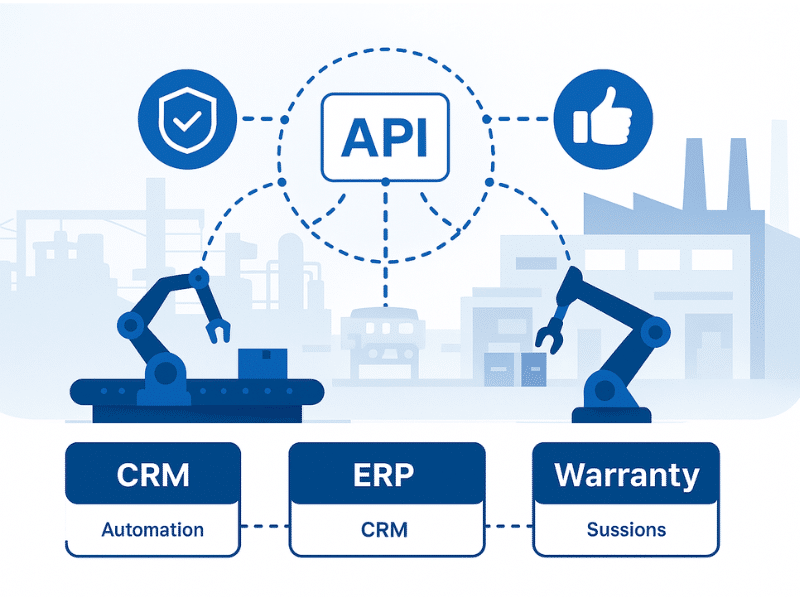
An API-ready warranty solution integrates directly with your existing tech stack:
-
CRM (Salesforce, HubSpot)
-
ERP (SAP, Oracle)
-
E-commerce platforms (Shopify, Magento)
APIs serve as the connective tissue, enabling real-time data exchange that eliminates duplication and error.
How APIs Transform CX and Compliance
With APIs in place, manufacturers can:
-
Auto-register warranties at purchase
-
Offer self-service portals for customers
-
Provide real-time claim status updates
-
Instantly adapt documentation for audit-readiness
Examples in Action
-
Claims data flowing directly into finance for accrual management
-
Registration details syncing with CRM for personalized outreach
-
Service portals providing live updates to customers post-sale
This isn’t future-thinking—it’s best practice.

From Compliance Pain to Conversion Power
Streamline Compliance, Reduce Costs
Automating warranty processes via API integration minimizes human error and ensures your records stand up to scrutiny. Digital audit trails, real-time reporting, and jurisdictional adaptability become table stakes—not stress points.
Turning Post-Sale Touchpoints into Revenue Opportunities
An embedded, API-connected warranty isn’t just protection—it’s a reason for customers to engage again:
-
Upsell opportunities through extended coverage
-
Cross-sell based on product lifecycle
-
Loyalty programs tied to seamless post-sale experiences
Building Trust Through Transparency
-
Fast claims boost NPS scores
-
Proactive communication reduces frustration
-
Visible, reliable processes strengthen brand loyalty
Conversion isn’t just about new customers—it’s about keeping the ones you’ve earned.
Turn Compliance Into Conversion
Book a consultation to see how API-integrated warranty solutions can reduce risk, increase efficiency, and boost revenue for your OEM brand.
The Business Case: ROI Beyond Risk Reduction
Lower Operational Costs, Higher Efficiency
API integrations eliminate manual data entry, freeing up teams for higher-value work. Reduced cycle times mean faster resolutions, happier customers, and less churn.
Increased Lifetime Value (LTV) Through Better CX
Warranty touchpoints become relationship milestones—not points of friction. Customers who experience seamless support are:
-
More likely to repurchase
-
More open to premium offers
-
More likely to refer others
Data-Driven Product and Service Innovation
Your warranty data holds clues:
-
Which products fail early?
-
What coverage confuses customers?
-
Where can CX improve?
APIs turn this data into actionable insights.
How to Build or Buy API-Ready Warranty Solutions
Key Features to Demand
When evaluating platforms, ensure they offer:
-
Open APIs for flexibility
-
ISO/IEC certifications for data security
-
Multi-region compliance support (especially for PIPEDA, FSRA, Quebec)
Integration Considerations
Look for systems that:
-
Sync seamlessly with CRM, ERP, and service portals
-
Scale as your product lines grow
-
Provide real-time reporting for internal and regulatory use
Avoid These Common Mistakes
-
Choosing closed, inflexible systems
-
Over-customizing to the point of fragility
-
Neglecting future compliance needs
When in doubt, book a consultation with a warranty API expert to ensure your investment scales with you.
Conclusion: Compliance Is the Floor—Conversion Is the Ceiling
OEMs that treat warranties as a compliance checkbox are missing the bigger opportunity. API-ready solutions turn necessary protections into conversion machines, unlocking efficiency, trust, and growth. They transform post-sale moments from legal obligations into business advantages.
Ready to see how API-ready warranties can future-proof your manufacturing business?
Book your consultation today. Let’s build a warranty solution that drives compliance and conversion.
Frequently Asked Questions
What is an API-ready warranty solution?
It’s a platform that connects your warranty system to your CRM, ERP, and other software via APIs for real-time data and automation.
How does it help with compliance?
Automated reporting, jurisdictional tracking, and audit trails make it easier to meet FSRA, PIPEDA, and Bill 64 standards.
Can it improve customer retention?
Yes. Faster claims, better communication, and transparency build trust and loyalty, directly impacting LTV.