Introduction: Why Warranties Matter in HVAC & Roofing
Homeowners today are making some of the largest investments of their lives: heating and cooling systems, and roofs that protect their entire property. Both categories carry high upfront costs and even higher replacement risks.
Extended warranties are no longer a “nice-to-have” — they’ve become a strategic revenue driver for HVAC contractors and roofing companies. By offering customers peace of mind, dealers create predictable revenue streams while strengthening customer loyalty.
Put simply: extended warranties deliver ROI for both the homeowner and the business.
What Are Extended Warranties in HVAC & Roofing?
Extended warranties go beyond the standard manufacturer guarantee, offering longer coverage and broader protection.
-
HVAC Examples: 10-year coverage on compressors, labor reimbursement for system failures, maintenance service add-ons.
-
Roofing Examples: Leak-protection warranties, extended coverage on shingles or membrane, workmanship guarantees.
These programs ensure that customers feel protected against unexpected repair costs, while contractors gain recurring revenue and repeat business.
Explore more: Home Warranty Solutions Hub
Revenue Impact for Contractors & Dealers
1. Direct Revenue
-
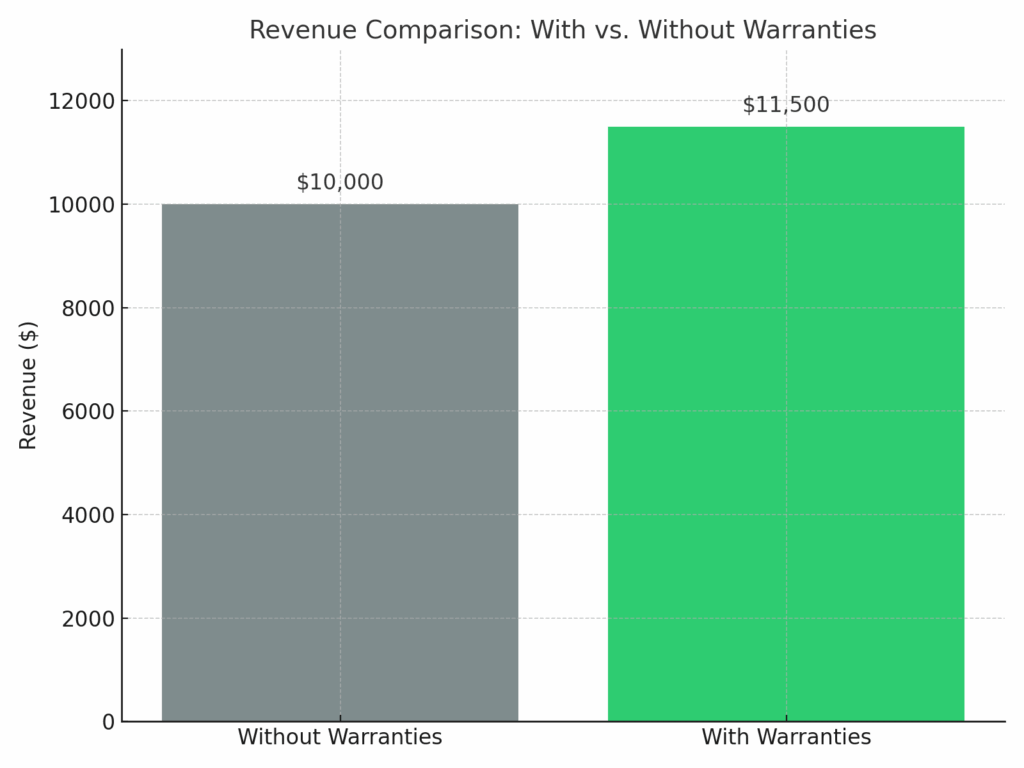
Warranty packages typically carry 20–40% profit margins.
-
Warranties can be upsold at installation, increasing per-project revenue.
2. Recurring Revenue
-
Opportunities for renewals every 3–5 years.
-
Service fees from claims administration and maintenance programs.
3. Lifetime Value (LTV)
-
Customers who buy warranties are twice as likely to return for service.
-
Higher retention = repeat revenue for parts, labor, and future upgrades.
Case study: A contractor offering branded roofing warranties reported 15% higher retention compared to competitors without warranty programs.
Consumer Behavior: Why Customers Say “Yes”
Extended warranties thrive because customers fear high out-of-pocket costs.
-
HVAC Repairs: $500–$7,500 (average U.S. range, DOE) .
-
Roof Replacement: $10,000–$20,000+ depending on size and materials (NRCA).
When positioned correctly, warranties feel like a rational investment — a fraction of the cost compared to a single major repair.
External resources:
Compliance & Transparency in Warranties
Transparency isn’t optional — it’s regulated.
-
United States: The FTC Warranty Rules require clear disclosures about coverage, duration, and exclusions.
-
Canada: PIPEDA and Quebec’s Bill 64 (Law 25) require bilingual, transparent consent.
Dealers who build trust through clear, bilingual, and accessible warranty disclosures win both legally and commercially.
Related Reading: Behind the Compliance (PIPEDA + Bill 64)
How Warranties Build Trust & Retention
Extended warranties create sticky customer relationships.
-
Peace of Mind: Homeowners know they’re covered.
-
Reduced Disputes: Clear disclosures prevent misunderstandings.
-
Brand Loyalty: Customers return to the contractor that gave them protection.
Forrester (2021): Companies that offer transparent post-sale protection reduce churn by 23%.
Implementation for HVAC & Roofing Businesses
1. Sales Training
-
Educate teams on value framing: “This protects your $10,000 system for pennies a day.”
-
Provide bilingual scripts and digital handouts for customers.
2. Warranty Administration Software
-
Automates warranty registration, renewals, and claims.
-
Tracks consent and logs proof for regulators.
Related: Warranty Program Development
3. Marketing Extended Warranties
-
Bundle with installation quotes.
-
Promote in brochures, websites, and financing packages.
-
Position as a trust-builder, not an upsell.
The ROI of Extended Warranties
ROI Formula:
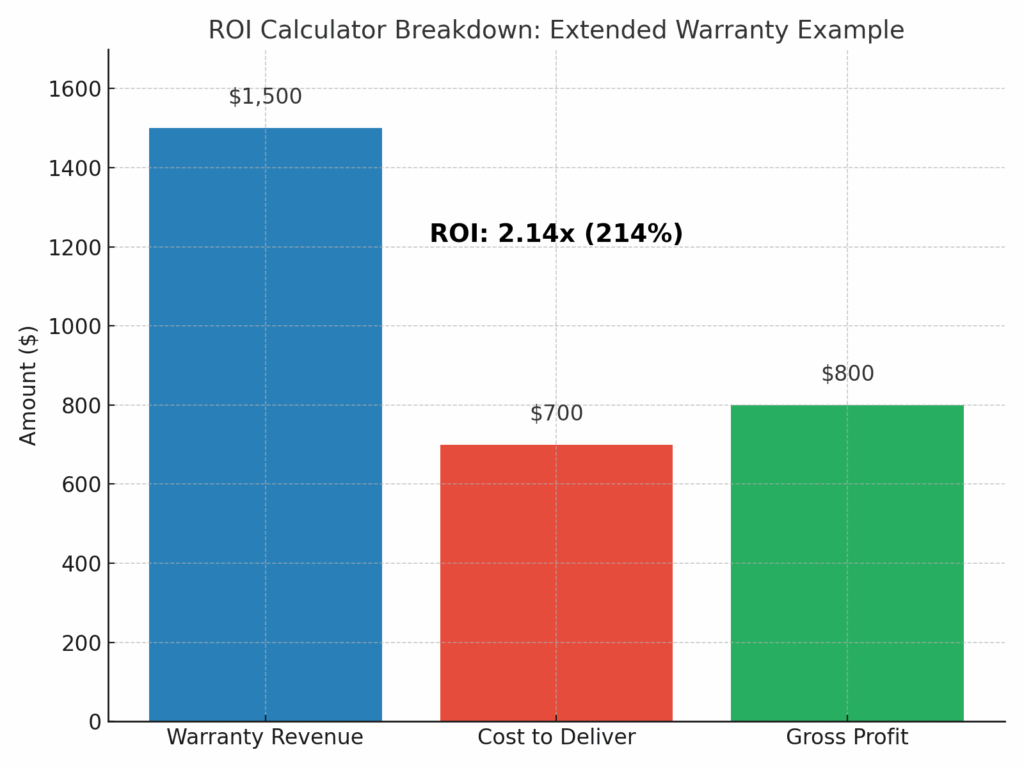
Revenue from Warranties ÷ Cost to Deliver = ROI
Example:
-
Warranty sold for $1,500
-
Cost to deliver: $700
-
Gross profit: $800 (46% margin)
Contractors offering warranties report 20–30% higher long-term profitability, thanks to repeat business and reduced churn.
Future Trends in Warranty Revenue (HVAC & Roofing)
-
Smart Home Integration: IoT sensors tied to warranties → proactive repairs.
-
Sustainable Roofing Programs: Green-certified coverage for eco-materials.
-
AI-Powered Claims: Automated approvals reduce processing costs.
Conclusion: Make Extended Warranties Your Growth Engine
For HVAC and roofing professionals, extended warranties are more than a safety net — they are a growth strategy. They:
-
Generate new revenue.
-
Increase customer loyalty.
-
Build regulatory trust.
Ready to transform warranties into a profit center? Book a Warranty Revenue Strategy Session.
FAQs: Extended Warranties in HVAC & Roofing
1. How much revenue do contractors make from extended warranties?
Typically, 20–40% margins on warranty packages, plus recurring renewal revenue.
2. Are HVAC extended warranties worth it for homeowners?
Yes. A $500 warranty can offset repairs that often exceed $3,000.
3. What compliance rules apply to roofing warranties?
FTC rules in the U.S., PIPEDA and Bill 64 in Canada, and regional consumer protection laws.
4. How can contractors sell warranties without losing trust?
By being transparent, offering bilingual disclosures, and framing warranties as protection, not a hidden cost.
5. Can warranties be automated with software?
Yes. Modern APIs handle registration, consent logs, and claims workflows seamlessly.