In today’s competitive market, Original Equipment Manufacturers (OEMs) are constantly seeking innovative ways to enhance customer loyalty and differentiate their brand. One effective strategy gaining traction is the implementation of white-label warranty programs. These programs not only provide added value to customers but also reinforce brand trust and encourage repeat business.
Quick Take: White-Label Warranties Build Brand Equity
Want your post-sale experience to drive repeat purchases—not just handle repairs? White-label warranty programs let OEMs boost trust, streamline operations, and monetize protection—all under your brand.
- Strengthen brand loyalty with fully branded support
- Capture post-sale revenue with premium plans
- Scale fast without building infrastructure
Tip: The best OEMs make the warranty feel like part of the product, not an afterthought.
What Are White-Label Warranty Programs?
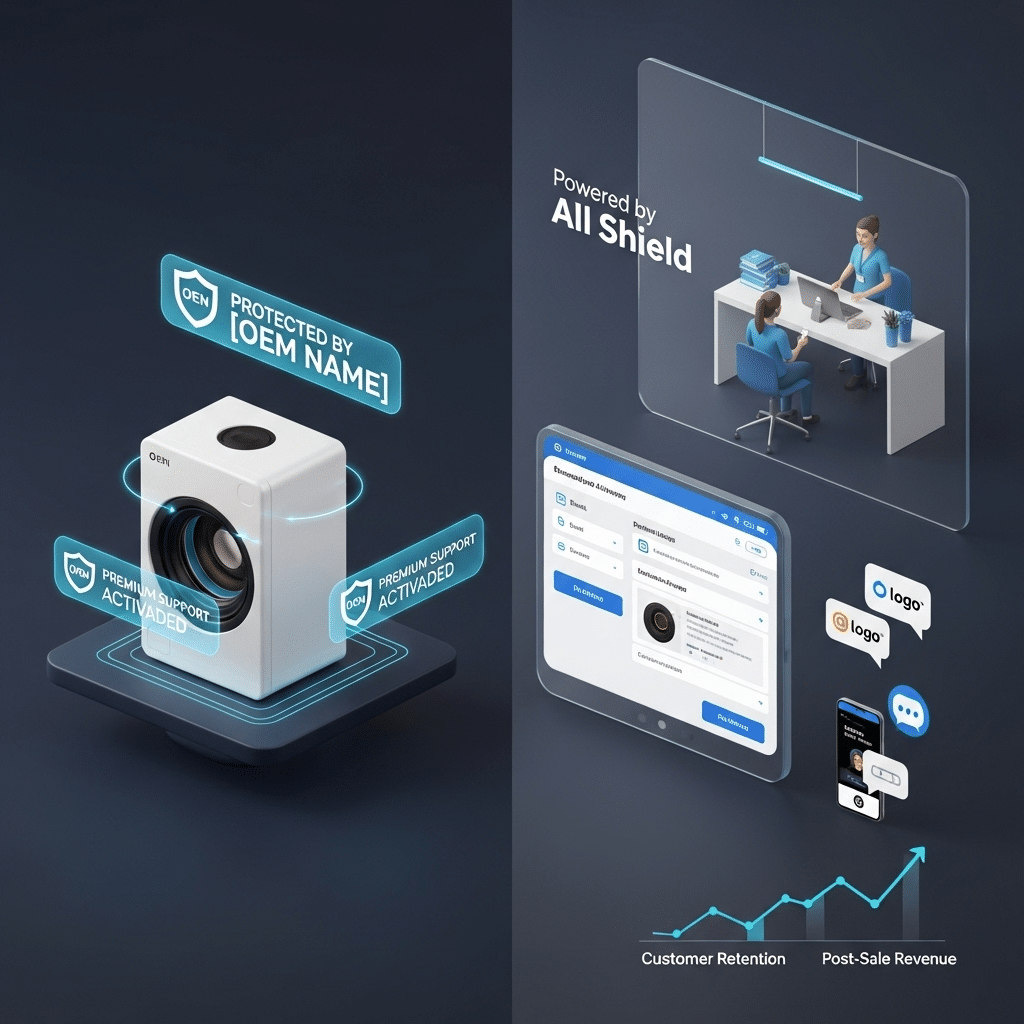
White-label warranty programs are services provided by third-party administrators that OEMs can brand as their own. This means the warranty appears to be offered directly by the OEM, maintaining brand consistency, while the backend operations, including claims processing and customer service, are managed by the third-party provider.
Benefits of White-Label Warranties for OEMs
1. Enhance Customer Trust
By offering warranties under their own brand, OEMs can strengthen customer confidence. Customers are more likely to trust and feel secure with warranties that carry the OEM’s branding, leading to increased satisfaction and loyalty.
2. Drive Repeat Purchases
White-label warranties can be structured to include incentives for future purchases, such as discounts on extended warranties or upgrades. This strategy encourages customers to return for additional products or services, boosting sales and fostering long-term relationships.
3. Increase Post-Sale Revenue
Offering premium warranty options and add-ons can generate additional revenue streams. OEMs can benefit financially from these programs without the need to invest heavily in infrastructure or personnel.
4. Reduce Operational Overhead
Partnering with a third-party administrator allows OEMs to offer comprehensive warranty services without the burden of managing the logistics. This includes handling claims, customer inquiries, and compliance issues, freeing up resources to focus on core business activities.
🏆 Why White-Label Warranties Work for OEMs
- End-to-End Branding: Every claim, email, and dashboard reflects your logo and tone.
- Revenue Without Risk: Premium plans and upsells generate margin—without new headcount.
- Plug-and-Play Integration: APIs connect seamlessly with eCommerce and CRM platforms.
- Faster Time to Market: Deploy in 4–8 weeks with a turnkey platform like All Shield’s.
Implementing a White-Label Warranty Program
To successfully launch a white-label warranty program, OEMs should consider the following steps:
- Identify Customer Needs: Understand what your customers value in a warranty program, such as coverage options, ease of claims processing, and customer support.
- Choose the Right Partner: Select a reputable third-party administrator with experience in your industry and a track record of compliance and customer satisfaction.
- Customize the Program: Work with your partner to tailor the warranty offerings to align with your brand and meet customer expectations.
- Train Your Team: Ensure that your sales and customer service teams are well-versed in the warranty program details to effectively communicate benefits to customers.
- Monitor and Adjust: Regularly review program performance and customer feedback to make necessary adjustments and improvements.
Conclusion
White-label warranty programs offer OEMs a strategic advantage in building brand loyalty, enhancing customer satisfaction, and generating additional revenue. By partnering with experienced third-party administrators, OEMs can deliver high-quality warranty services under their own brand, strengthening their market position and fostering long-term customer relationships.
Ready to elevate your brand with a white-label warranty program? Contact All Shield today to learn how we can help you implement a customized solution that meets your business needs.
Frequently Asked Questions: White-Label Warranty Programs
Q: How does a white-label warranty differ from a traditional warranty?
A: A white-label warranty is branded as yours, but managed by a third party—giving you full control without the in-house overhead.
Q: What are the compliance considerations for white-label warranties?
A: Choose partners familiar with industry laws. They’ll ensure your program meets data, language, and financial regulations like FSRA and PIPEDA.
Q: Can white-label warranties be customized for different products?
A: Yes. Tailor coverage levels, pricing tiers, and support flows to match product categories or buyer types.
Q: What types of products are best suited for white-label warranties?
A: High-value, durable goods—like appliances, electronics, HVAC, power tools, and vehicles—benefit most.
Q: Will customers know the warranty is run by a third-party provider?
A: Not at all. With full white-labeling, every email, support message, and portal carries your brand.
Q: How long does it take to launch?
A: Most OEMs can deploy in 4–8 weeks using a turnkey platform like All Shield’s.
Q: Can white-label warranties integrate with our eCommerce or CRM platform?
A: Absolutely. All Shield supports integrations with Shopify, Salesforce, BigCommerce, and custom CRMs via secure APIs.