Launching your own extended warranty program isn’t just a smart financial move—it’s now a competitive necessity. Whether you’re an OEM, eCommerce brand, retailer, or dealer, product protection is one of the fastest ways to build post-sale trust, generate recurring revenue, and gain operational control over customer experience.
“The moment you own your warranty experience is the moment you stop leaking revenue to third-party providers. Building a warranty program is no longer about risk transfer—it’s about value creation.”
All Shield
Why Launch Your Own Extended Warranty Program?
Retailers and manufacturers across North America are shifting away from insurance-first warranty providers. Here’s why:
- Control the customer experience post-sale
- Increase profit margins from upsells and renewals
- Differentiate your brand with faster, cleaner claims
- Stay compliant in the U.S. and Canada
Companies like Tesla, IKEA, and Dyson have all implemented proprietary warranty programs to drive loyalty and margin.
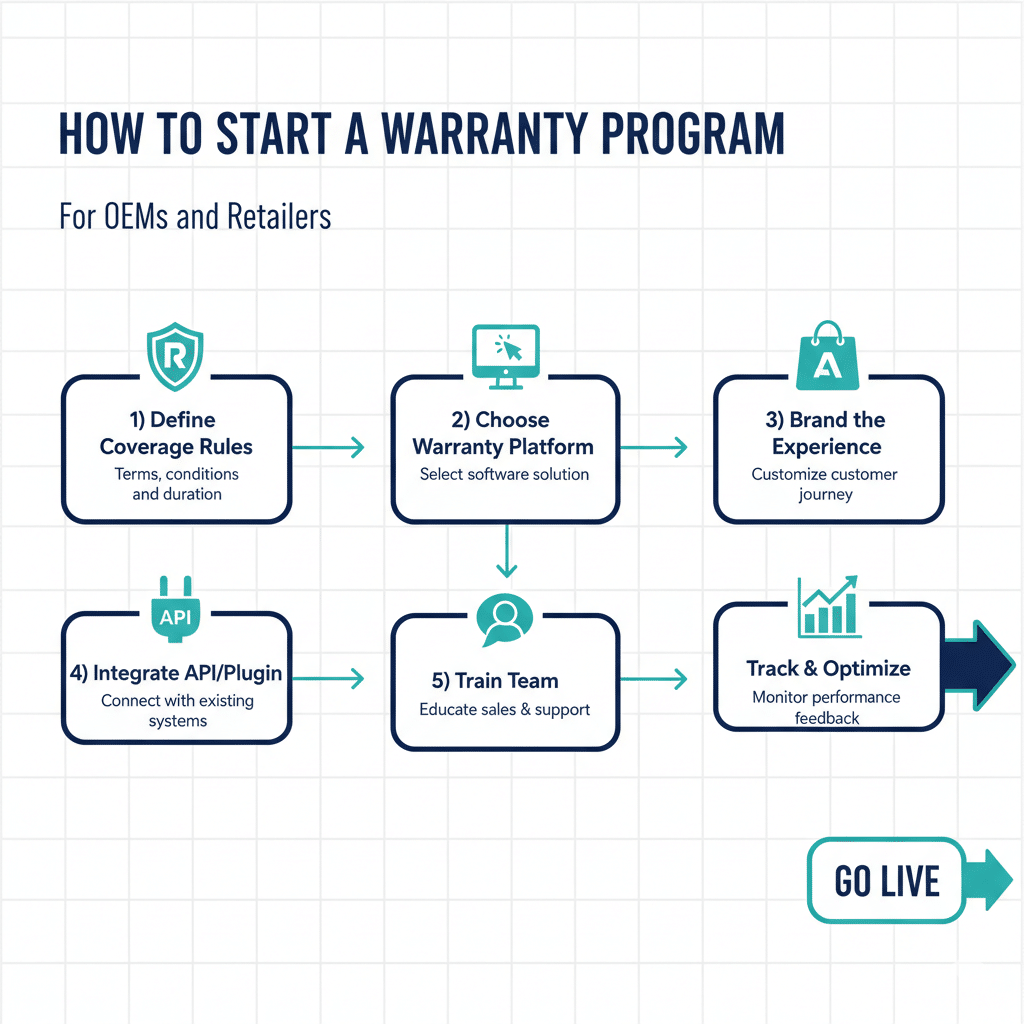
Six essential steps to launch a custom warranty program with full brand control and compliance.
What Kind of Extended Warranty Can You Offer?
Before launching, define your model:
- Extended Warranty: Covers failures after the standard manufacturer warranty ends
- Service Contracts: More flexible—can include repairs, replacements, or even tech support
- White-Label Warranty: Sold under your brand, powered by a backend provider like All Shield
Examples:
- Electronics retailer: Sell extended protection at checkout
- HVAC OEM: Offer parts & labor coverage through dealers
- Smart home brand: Provide API-driven warranty registration
Do You Need a License to Offer Extended Warranties?
In both the U.S. and Canada, you can offer a compliant warranty program without being a licensed insurer.
In most U.S. states and Canadian provinces, you don’t need a license if:
- You partner with a compliant administrator
- You disclose terms transparently
- You avoid language that implies insurance risk
All Shield ensures alignment with FTC rules, PIPEDA, FSRA, and Quebec Bill 64. We audit every client for compliance in both countries.
What Tools Do You Need to Build an Extended Warranty Program?
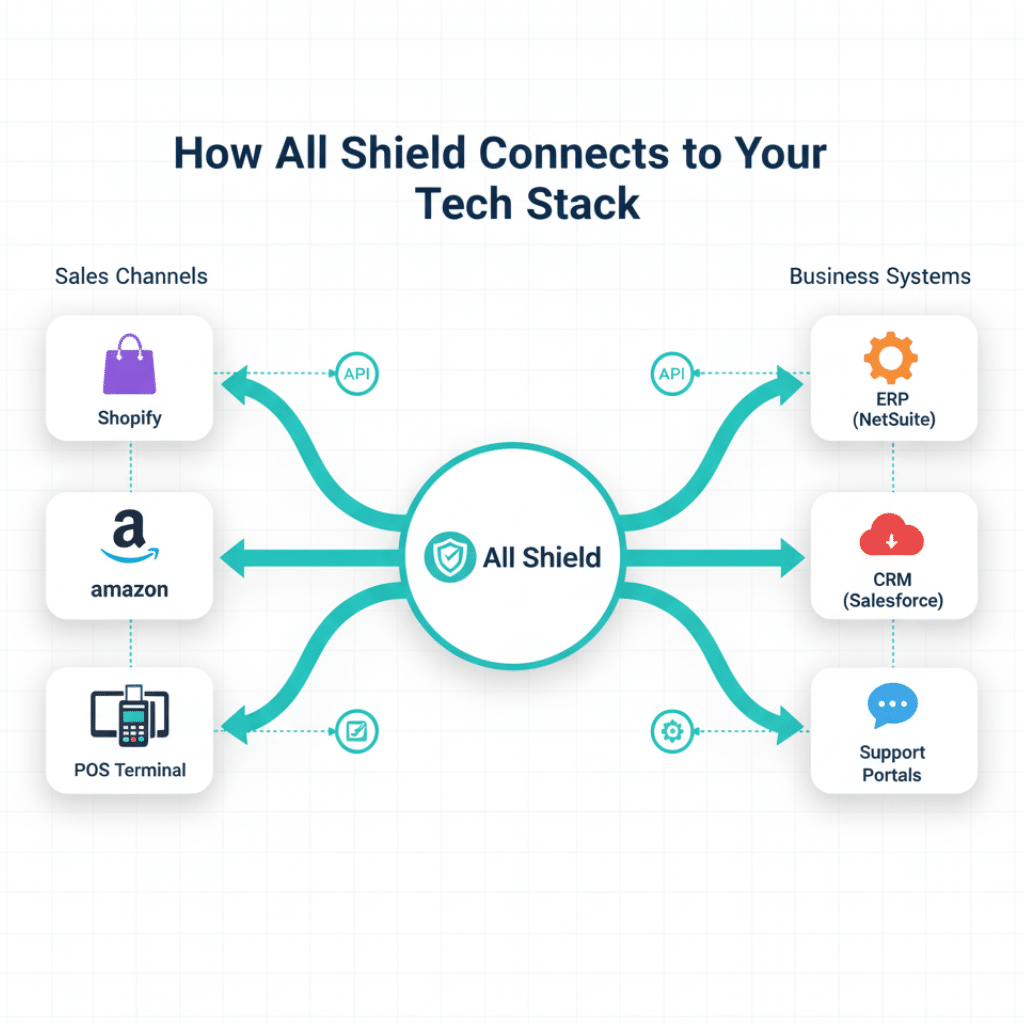
You’ll need tools like real-time warranty API integration and bilingual claims portals.
To scale without headaches, you’ll need:
- Warranty platform (All Shield)
- API or plugin integration (Shopify and Amazon warranty plugins)
- Automated product registration
- Real-time claims processing
- Multilingual support (EN/FR)
- Dashboard for performance analytics
How to Customize Your Extended Warranty Program by Industry
- Auto Dealers: VIN-based warranty registration; F&I integration
- Electronics Retailers: In-cart warranty offers; product-specific upsells
- Furniture & Appliance Brands: QR-based product registration; low-friction claim submission
- Smart Home OEMs: Embedded API that tracks devices post-sale
Common Mistakes to Avoid When Building an Extended Warranty Program
- Offering vague coverage terms
- Ignoring legal disclosures
- Using manual or spreadsheet-based claims tracking
- Choosing providers that brand themselves (instead of you)
- Not offering bilingual experiences in Canada
Conclusion: Ready to Launch?
All Shield helps brands like yours turn extended product protection into a performance engine. With our white-label platform, embedded APIs, and full legal compliance in both the U.S. and Canada, your warranty program can go live in under 30 days.
Book a free strategy session to design your program with our Warranty Growth Advisors.
FAQ
Q: Can small brands offer their own extended warranty program?
Yes. With platforms like All Shield, even boutique DTC brands can offer fully compliant coverage.
Q: How do I handle extended warranty claims?
Our system automates claims routing, response times, and payouts—branded to your business.
Q: Is All Shield bilingual?
Yes. Our platforms support French and English with compliance baked in for Quebec.
Q: What if I don’t want to build tech infrastructure?
We provide the backend. You control the front-end experience.
Q: What industries does this work for?
Retail, auto, electronics, furniture, fitness, HVAC, DTC eComm, and more.